

Why I Still Trust a Hardware Wallet — and Why You Should Care
March 6, 2025Why I Trust Keplr for IBC Transfers and ATOM Staking (and how you can, too)
March 30, 2025Wow!
I was poking around a SOL transaction the other night, here in Brooklyn, and got kind of obsessed. At first it was curiosity; then it became a hunt for who moved what and when. Initially I thought the on-chain trace would be straightforward, but then the layers of token wrappers, edge-case program logs, and inner instructions revealed themselves and shifted the whole picture. It felt messy, human, and kind of thrilling to follow.
Whoa!
Solana explorers act like binoculars into on-chain drama and history. A token tracker shows balances, mint authority, transfers and sometimes those odd mint anomalies, somethin’ that trips new users up. On days when blocks are full and transactions cascade, you can watch fees spike and programs reroute funds via inner instructions, and if you have patience and heuristics you’ll start to see patterns. It rewards digging, though it does demand some context to read right.
Hmm…
Here’s the thing: different explorers emphasize different data and UX choices. Some make token history easy to scan while others bury event logs behind nested UI patterns. My instinct said use the prettiest UI, but then I realized that for forensic tracing you want raw logs, inner instruction details, and clear program IDs, so a clean minimalist interface sometimes loses to a heavy-duty technical view (oh, and by the way… some explorers will hide program IDs behind labels, so watch those labels). I’m biased toward tools that give me both perspectives.
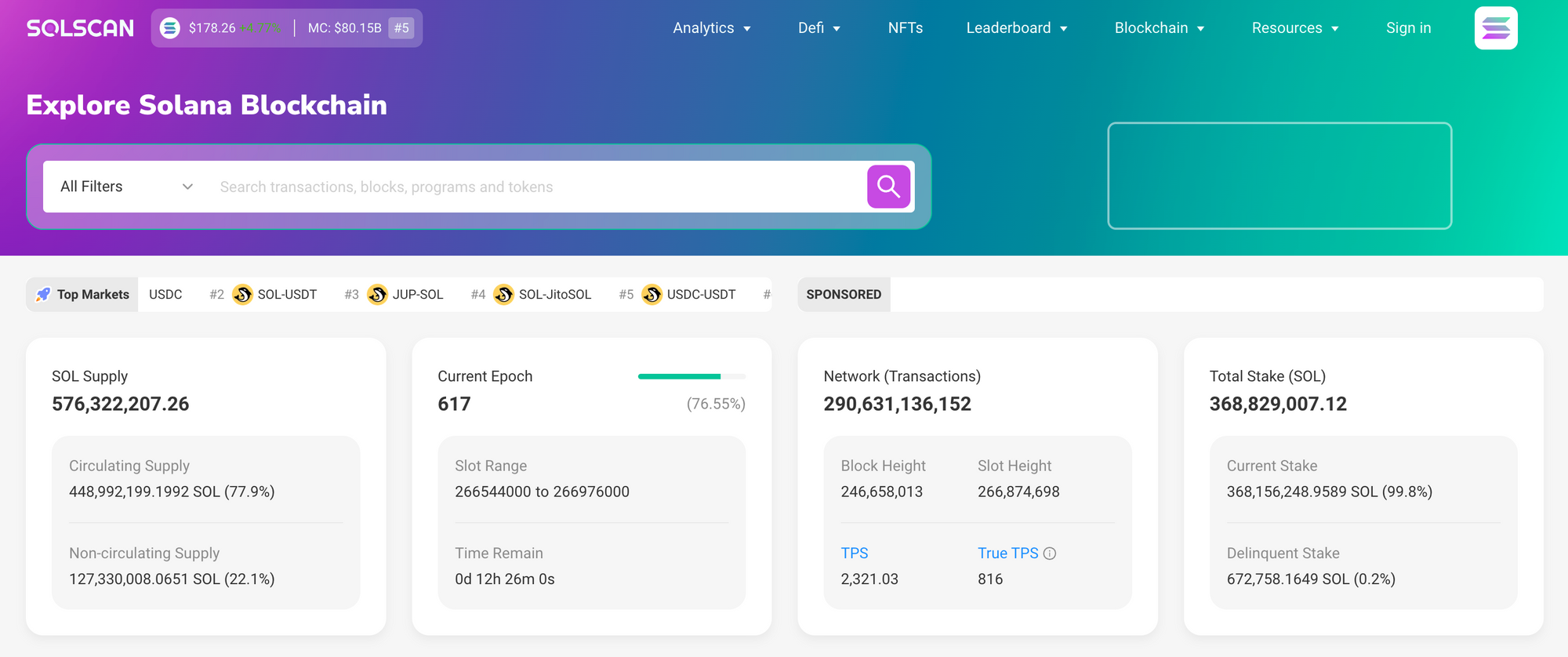
Hands-on: using solscan explorer
Really?
I often start with solscan explorer to trace token mints and swaps. The token tracker page shows holders, decimals, and transfer history at a glance. When an odd transfer shows up you can click through to transaction details, inspect inner instructions, read program logs, and sometimes reconstruct what a bot or smart contract tried to do, which helps decide if a token event was benign or malicious. My instinct said that a quick glance would be enough, but actually you often need a couple of hops into related transactions to get the full story.
Wow!
A few practical tips will make that hunt a lot faster. Filter by block time, watch for inner instruction patterns, and check program IDs before trusting token labels. Also consider cross-referencing with program repositories, cluster explorers, and on-chain indexers, because labels and metadata can be user-supplied and occasionally misleading when tokens are cloned or scams are involved. I’m not 100% sure every explorer tags things correctly, so treat single-label evidence as a starting clue.
Okay, so check this out—
Tracing SOL transactions has taught me both patience and a little skepticism. On one hand you can see value flow transparently; on the other, program actions need deep reading to interpret. Initially I thought blockchains would make everything obvious, but actually, wait—let me rephrase that, because visibility is different from understandability and you need domain knowledge to turn raw logs into a reliable narrative about intent and risk. So yeah, it’s wild, useful, and yes, sometimes frustrating… and then you’re like, what just happened?
FAQ
How do I verify a suspicious token transfer?
Start with program logs. Open the transaction, expand inner instructions, and read logs where events are emitted. If you see odd mint events or transfers that don’t match the token’s decimals or mint authority, dig into the program ID and related instructions so you can tell whether it’s a legitimate token event or something injected by a wrapper or scam contract.
Should I trust a single explorer’s labels?
For deeper validation export the transaction JSON, run it through a local parser or a community tool, and compare signatures, fee payer, and recent blockhash to ensure there are no replay or indexing oddities that could confuse UI displays. Also, check multiple explorers and indexers for consensus on labels and balances. And when in doubt, ask in developer channels or open an issue on the token’s repo.
